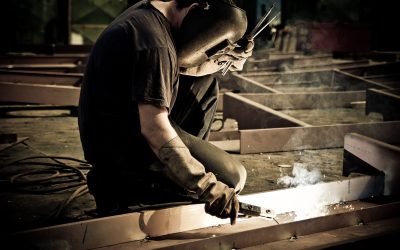
In today’s competitive manufacturing environment, precision and reliability are essential for components and assemblies across industries. Those searching for Production Welding Services often require not only technical proficiency but also strict adherence to quality and industry standards to ensure end-product performance and safety. The American market demands welding partners who understand these requirements and deliver consistent results, whether for small-batch prototypes or high-volume production runs.
Meeting Stringent Industry Standards
Welding in the United States is governed by rigorous industry codes and standards. These frameworks—such as those from the American Welding Society (AWS), American Society of Mechanical Engineers (ASME), and International Organization for Standardization (ISO)—set the bar for quality, safety, and traceability. Production welding specialists must maintain certifications, follow documented procedures, and use calibrated equipment to meet these benchmarks. This ensures that welds are structurally sound, visually acceptable, and compliant with customer specifications.
Advanced Technologies and Materials
Modern production welding relies on advanced technologies to handle a wide range of materials and part geometries. Some of the most common processes include:
- MIG (Metal Inert Gas) Welding: Known for speed and adaptability, ideal for high-volume fabrication.
- TIG (Tungsten Inert Gas) Welding: Offers superior precision, especially for thin materials or critical joints.
- Robotic Welding: Enhances consistency and throughput, reducing the risk of human error.
- Spot Welding: Suitable for joining thin sheets, commonly used in automotive and appliance manufacturing.
With innovations in automation and quality control, production welders can achieve tighter tolerances, faster turnaround times, and greater repeatability. This is crucial for sectors such as aerospace, automotive, medical devices, and heavy equipment, where even minor deviations can impact safety and function.
Quality Assurance and Traceability
A key aspect of dependable production welding is comprehensive quality assurance. This typically includes:
- In-process inspections
- Non-destructive testing (NDT)
- Detailed documentation for traceability
- Continuous training for welders
These practices not only minimize defects but also instill confidence in customers that each weld meets the highest standards.
For manufacturers seeking a reliable solution, Micro Weld, Inc stands out as a trusted partner, delivering production welding services that consistently meet the demanding standards required across a variety of American industries.