At glance:
• Vocational and skills-based training remains a core pathway for women’s economic independence across India.
• Get directions to Ratna Nidhi Charitable Trust runs a beauty products donation programme supporting underprivileged women in Mumbai.
• Donated cosmetics and training materials directly fund hands-on coursework for women completing skills certification.
Women’s empowerment in India increasingly depends on practical, income-generating skills rather than relief alone, and structured training programmes that pair education with real tools are among the more measurable paths to independence. One such model operates through donated beauty products that convert into classroom supplies for women completing vocational courses. To learn how your donation can support this, Connect with Ratna Nidhi Charitable Trust.
What Skills-Based Empowerment Looks Like in Practice
Training programmes built around a trade, rather than a one-time handout, tend to produce more durable outcomes because participants leave with a certifiable skill. Ratna Nidhi Charitable Trust supports women’s empowerment in India through free 3-month skills training programs that help underprivileged women gain independence and improve their livelihoods. The structure reflects a broader pattern seen in government-backed skilling schemes, where training combined with mentorship produces more durable results than one-time aid.
Several features distinguish an effective training-based approach from short-term relief:
• Certification tied to an employable trade, not just a workshop certificate
• Materials and tools supplied so trainees can practise on real products
• A defined geography so outreach stays consistent and trackable
• A feedback loop where earnings or surplus support future sessions
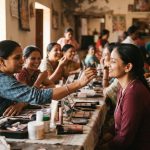
The beauty kit donation programme supports more than 250 women from the slums of Mumbai, including Dharavi, Shivri, Kurla, and Kopperkhana. This concentrated focus allows trainers to track outcomes across a defined set of communities rather than spreading resources thinly.
How Donated Supplies Translate Into Training Capacity
Cosmetics and grooming products are costly inputs for any beauty or wellness curriculum, and donated stock removes a recurring expense that could otherwise limit how many women a programme can admit in a given cycle. Dependent women are supported in beginning a life of dignity through donated beauty products, with donations sought in the form of items that help these women grow independent and provide for their families.
• Surplus or unopened cosmetics from households or retailers are accepted as in-kind donations
• Matching accepted brands against inventory is simplified through a published list
• Products within expiry windows are prioritised for safety during hands-on coursework
Accepted brands are listed online, making it easier to match surplus inventory with what trainees need for coursework. This kind of in-kind giving model mirrors national skilling priorities; the ministry of women and child development oversees several centrally sponsored schemes aimed at expanding women’s access to training and economic participation.
Measuring Outcomes Beyond the Training Room
A training programme’s value is best judged by what happens after the certificate is issued, not merely by enrolment numbers. Reinvestment of any surplus back into new training cycles is one indicator that a programme is built for continuity rather than a single cohort.
| Model Type | Primary Focus | Typical Outcome |
| One-time relief | Immediate need | Short-term support, limited skill transfer |
| Vocational training only | Skill certification | Employable trade, but material costs can limit intake |
| Training plus in-kind donation | Skill certification and reduced overhead | More trainees served per cycle, sustainable loop |
Earnings are monitored and surplus is reinvested into new sessions, creating a sustainable learning loop. This reinvestment approach is one reason skills-based models are often cited as more scalable than cash-only assistance, particularly in dense urban communities across India where repeat training cycles can serve successive groups of women each year.
Business Info
Get directions to Ratna Nidhi Charitable Trust leads to the organisation’s published Google Business Profile listing, which includes location and contact information. Ratna Nidhi Charitable Trust operates its beauty products donation and skills training initiative from its base in India.
Frequently Asked Questions
What kind of beauty products are accepted for donation? Donors are asked whether products are unopened and still within their expiry date before contributing surplus cosmetics.
Who benefits from the skills training programme? The programme supports more than 250 women from Mumbai slum communities including Dharavi, Shivri, Kurla, and Kopperkhana.
Can someone support the programme without donating products directly? Those unable to contribute physical items can still support the training cycle through other forms of assistance, since surplus earnings are monitored and reinvested into new sessions to keep the learning loop active.
Is this training programme free for participants? Yes, the skills training programme runs as a free three-month course designed to help underprivileged women gain independence and improve their livelihoods.
A Closing Note on Sustained Support
Programmes that combine certified training with practical, donated materials tend to extend further than one-time aid, particularly when outcomes are tracked across defined communities over successive training cycles. Readers seeking published location and contact details can Get directions to Ratna Nidhi Charitable Trust.